
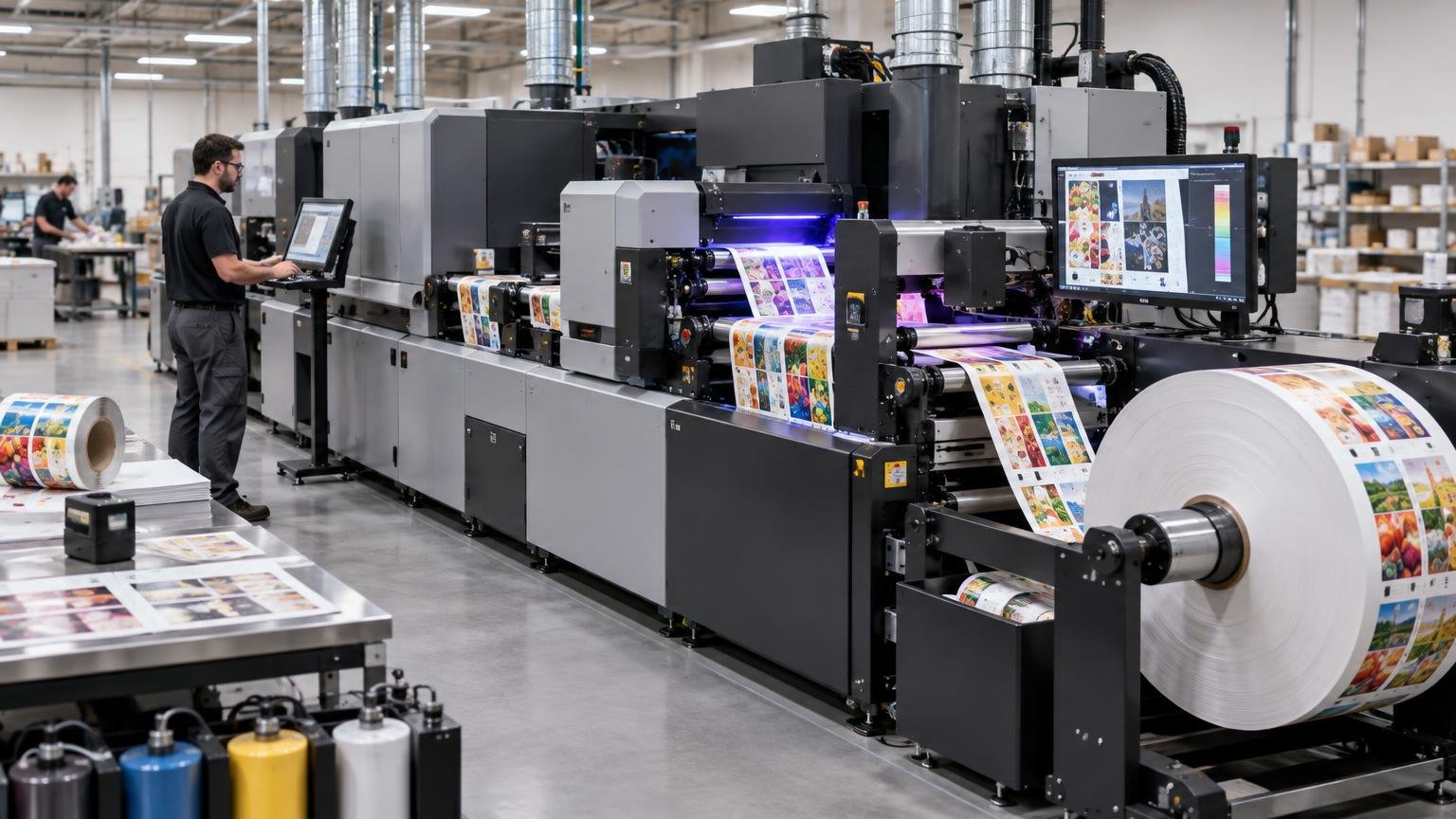
Production Inkjet, Digital Labels and Print Technology
Practical reporting for print professionals on the equipment, materials, workflows, and production tradeoffs that shape inkjet quality, throughput, and cost.
Production Inkjet, Digital Labels and Print Technology
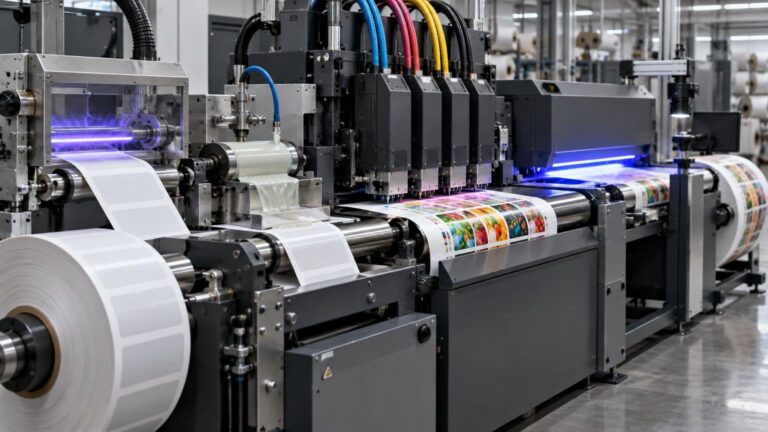
Ajax Inkjet is a technical publication for people who operate, buy, specify, or manage commercial printing systems. It covers production inkjet as a complete process: data enters a workflow, ink moves through a printhead, drops meet a prepared surface, energy removes liquid or cures chemistry, and finishing turns the printed sheet or web into sellable work.
The useful question is rarely whether a press can reach a headline speed or resolution. It is whether the configured system can sustain the required quality on the intended substrate while controlling waste, labor, maintenance, and downstream capacity. Ajax Inkjet connects specifications such as drop size, native resolution, cure dose, web width, and white-ink capability to those production consequences. That distinction matters most when a job mixes demanding color, variable data, short changeovers, or a constrained finishing route.
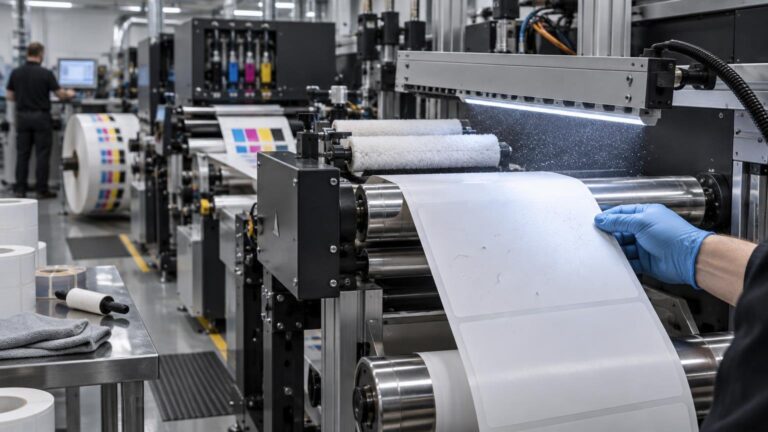
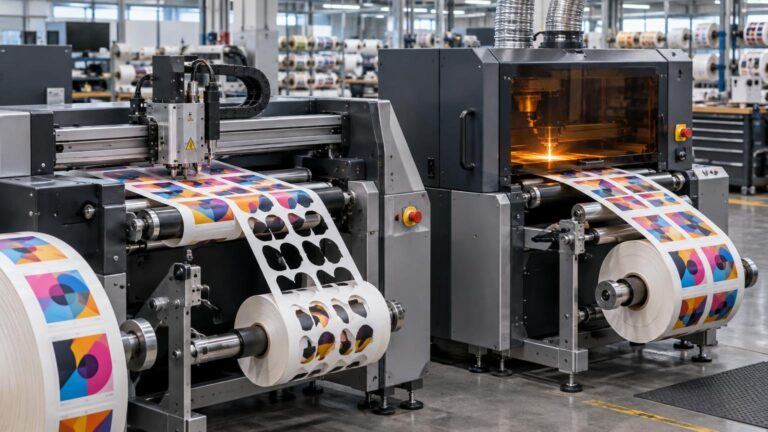
Labels and stickers receive particular attention because every layer affects the result. Facestock, adhesive, liner, surface treatment, primer, ink, white, varnish or laminate, cutting, matrix removal, inspection, slitting, and rewinding must work together. Nominal compatibility is only a starting point; a dependable production recipe has to account for the construction, workflow, and end-use conditions.
How to Use This Publication
Start with the stage that is limiting the job. If image quality is inconsistent, examine resolution, screening, nozzle condition, waveform, drop placement, media transport, and viewing distance separately. If ink rubs off or peels, distinguish wetting from adhesion and cure from finished durability. Similar-looking defects can require very different corrections.
For equipment evaluation, define the application and configuration before comparing models. Normalize web or sheet size, color set, white or varnish options, drying or curing, substrate range, duty cycle, automation, inspection, service requirements, and finishing. Rated speed should be separated from sustained throughput after cleaning, changeovers, stoppages, waste, and quality holds are included. The comparison should expose compromises, not hide them inside a maximum rating.
For label and sticker work, follow the construction from incoming roll to finished rewind. For workflow questions, follow the job record from preflight through printing, inspection, exception handling, and reconciliation. For cost questions, write down volume, coverage, labor, waste, uptime, and utilization assumptions. This approach makes it easier to find the variable that can genuinely change the decision.
Latest from Ajax Inkjet
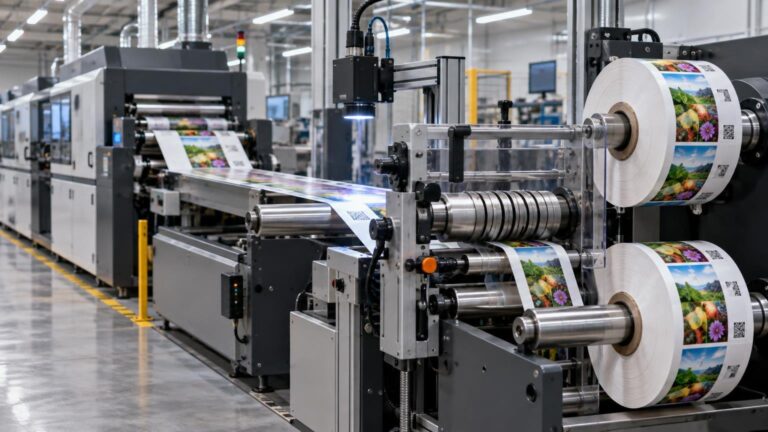
Make the Whole System the Decision
A print engine cannot compensate indefinitely for unstable media, weak adhesion, inadequate drying, poor file preparation, or a finishing department that cannot absorb its output. Ajax Inkjet treats these interactions as central production questions. The objective is to identify the constraint that determines accepted finished output rather than optimizing one impressive number in isolation. A fast press has little value when accepted output stalls at inspection, converting, or rewinding.
Economics receive the same system-level treatment. Ink price per liter matters, but so do coverage, purging, maintenance, substrate waste, operator time, service requirements, changeovers, finishing labor, and utilization. Meaningful cost comparisons state their assumptions and measure the cost of sellable production, not merely the price of one consumable or the theoretical output of a press.
The practical takeaway is simple: define the application before choosing the technology. Establish the material, format, run profile, quality target, durability requirement, variability, finishing route, inspection needs, and acceptable operating cost. Once those conditions are visible, equipment and process comparisons become more disciplined—and specifications can be judged by what they change on the production floor.